DogPayCard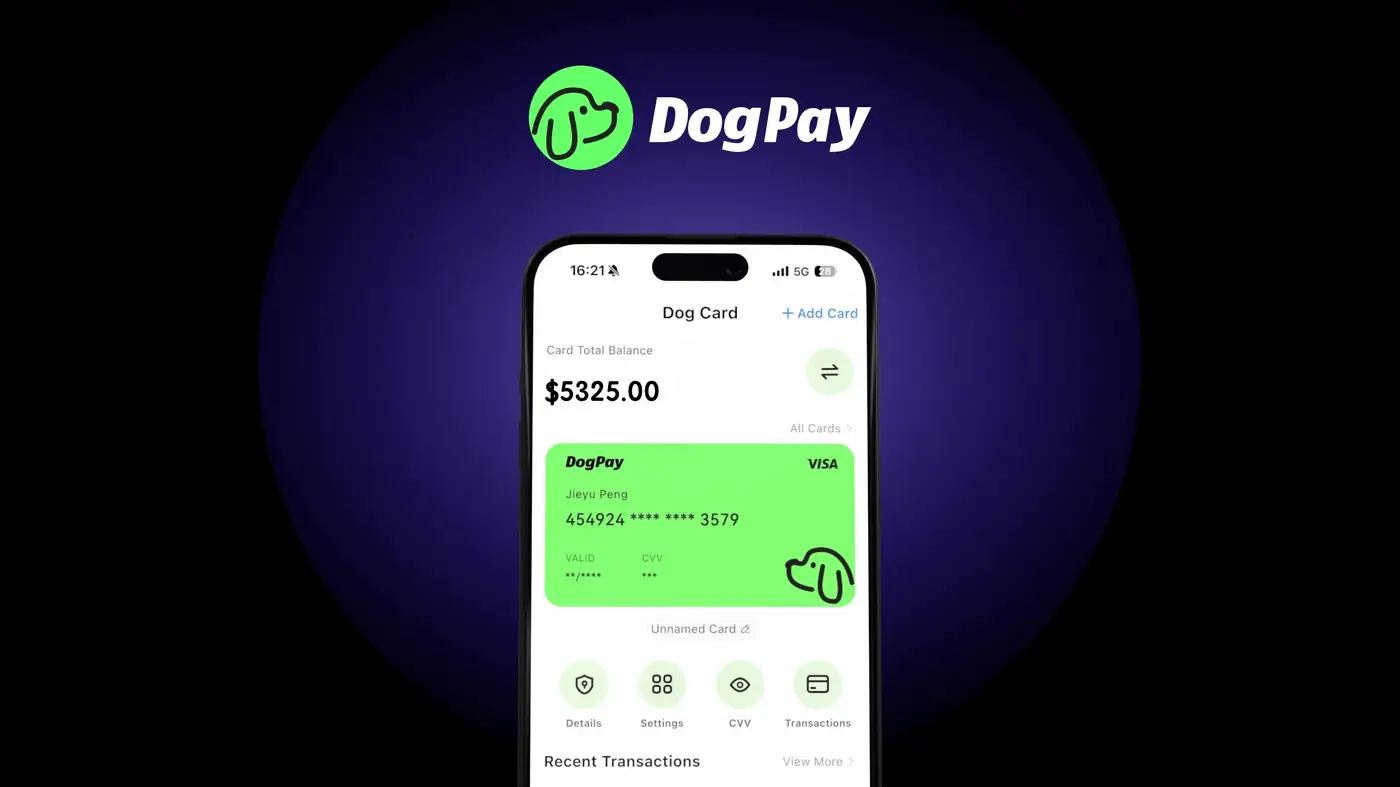
When businesses operate across borders, traditional payment methods often bring friction: currency conversion fees, slow settlement, and limited control. DogPay addresses these challenges with a payment workflow designed for global teams.
DogPay provides virtual cards that can be funded via stablecoin settlement, allowing businesses to pay international vendors, subscription services, and ad platforms without the usual banking delays. Each card comes with its own spend limits and real-time tracking, giving finance teams clear visibility into every transaction.
The process is straightforward: businesses load funds into their DogPay global account using stablecoins like USDC or USDT, then issue virtual cards for specific purposes. Payments are settled instantly, and the cards work wherever major card networks are accepted—though actual acceptance depends on the merchant and network.
For example, a SaaS company with remote contractors can create a dedicated card for each contractor, set monthly limits, and monitor usage through the dashboard. An ecommerce business can use a virtual card to pay for inventory from overseas suppliers, avoiding wire transfer fees and waiting times.
DogPay also simplifies reconciliation. Because each transaction is recorded with the card details and settlement in stablecoins, accounting teams can easily match payments to invoices. This reduces manual work and improves accuracy.
Moreover, DogPay’s global accounts enable businesses to hold and manage multiple currencies, which is useful for companies operating in several regions. This flexibility helps in managing cash flow and reducing currency risk.
In summary, DogPay can help businesses streamline cross-border payments with dedicated virtual cards, global accounts, stablecoin settlement, and robust spend visibility. By integrating these tools into their payment operations, finance teams can reduce friction and gain better control over international spending.