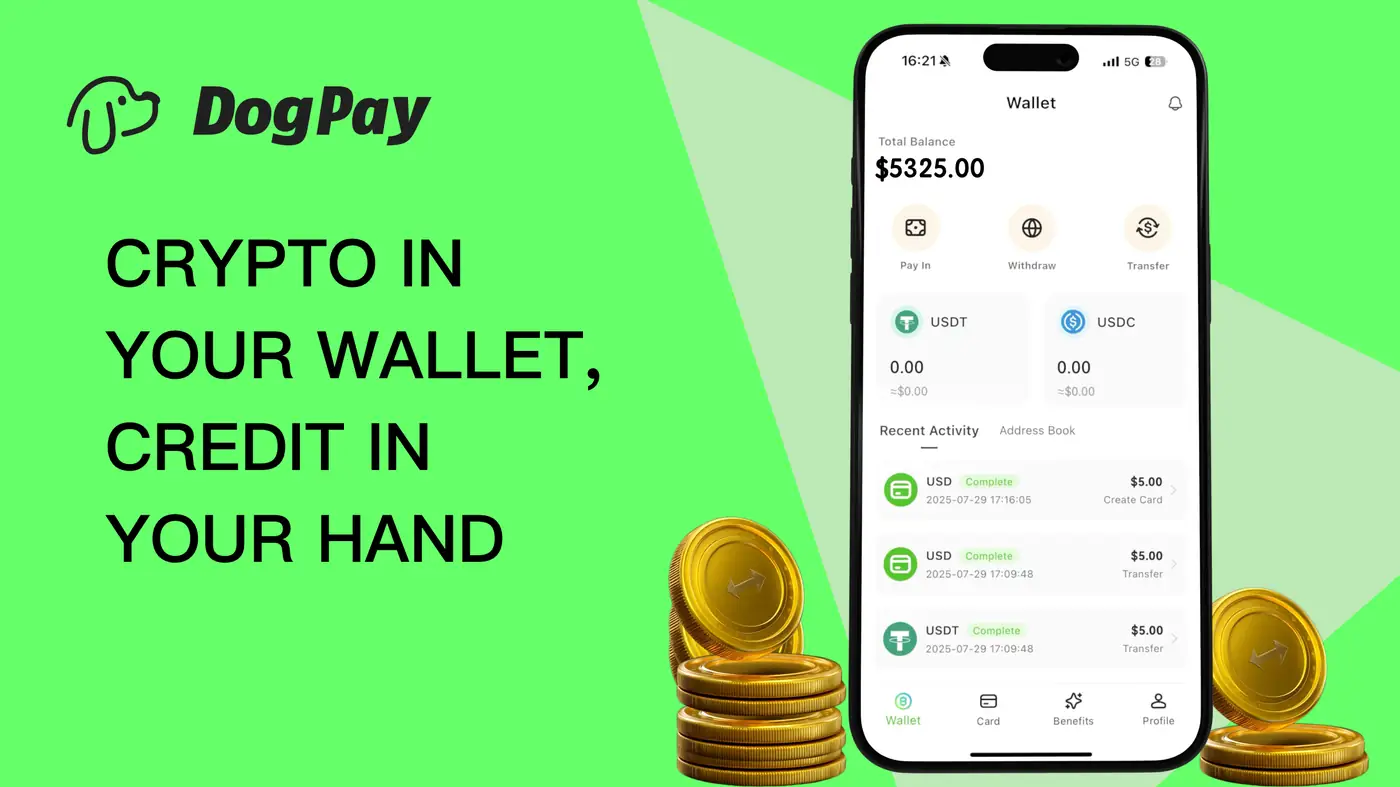
Choosing between virtual and physical cards depends on where and how your team spends. Virtual cards are ideal for online transactions like ad campaigns, software subscriptions, and digital services. They are created instantly and can be assigned per vendor, project, or employee, which supports clearer tracking and spend control. Physical cards are useful for in-person expenses such as travel, client meetings, or office supplies. They provide a tangible payment method for employees on the go. DogPay supports both card types through its global account and wallet infrastructure. You can fund cards with fiat or stablecoins, and settle transactions seamlessly. For virtual cards, you can generate dedicated card details for each use case, reducing risk and simplifying reconciliation. For physical cards, you can set spending limits and monitor usage in real time. Many businesses use a mix: virtual cards for recurring or remote purchases, and physical cards for occasional offline needs. This approach helps you maintain visibility across all spend categories. If your business regularly pays online vendors, virtual cards may handle most of your needs. If you have a field team or attend events, adding physical cards can cover those moments without exposing your primary account. DogPay fits into this workflow by offering both card options alongside global accounts, stablecoin settlement, and spend visibility. Whether you issue virtual or physical cards, DogPay's payment infrastructure is designed to support your business spend operations with flexibility and control.
Virtual Cards / 5 min read
How Should Businesses Use DogPay Virtual Cards vs Physical Cards?
Learn when to issue DogPay virtual cards for online spend and physical cards for in-person purchases, and how each fits your payment workflow.

DogPayCard Editorial